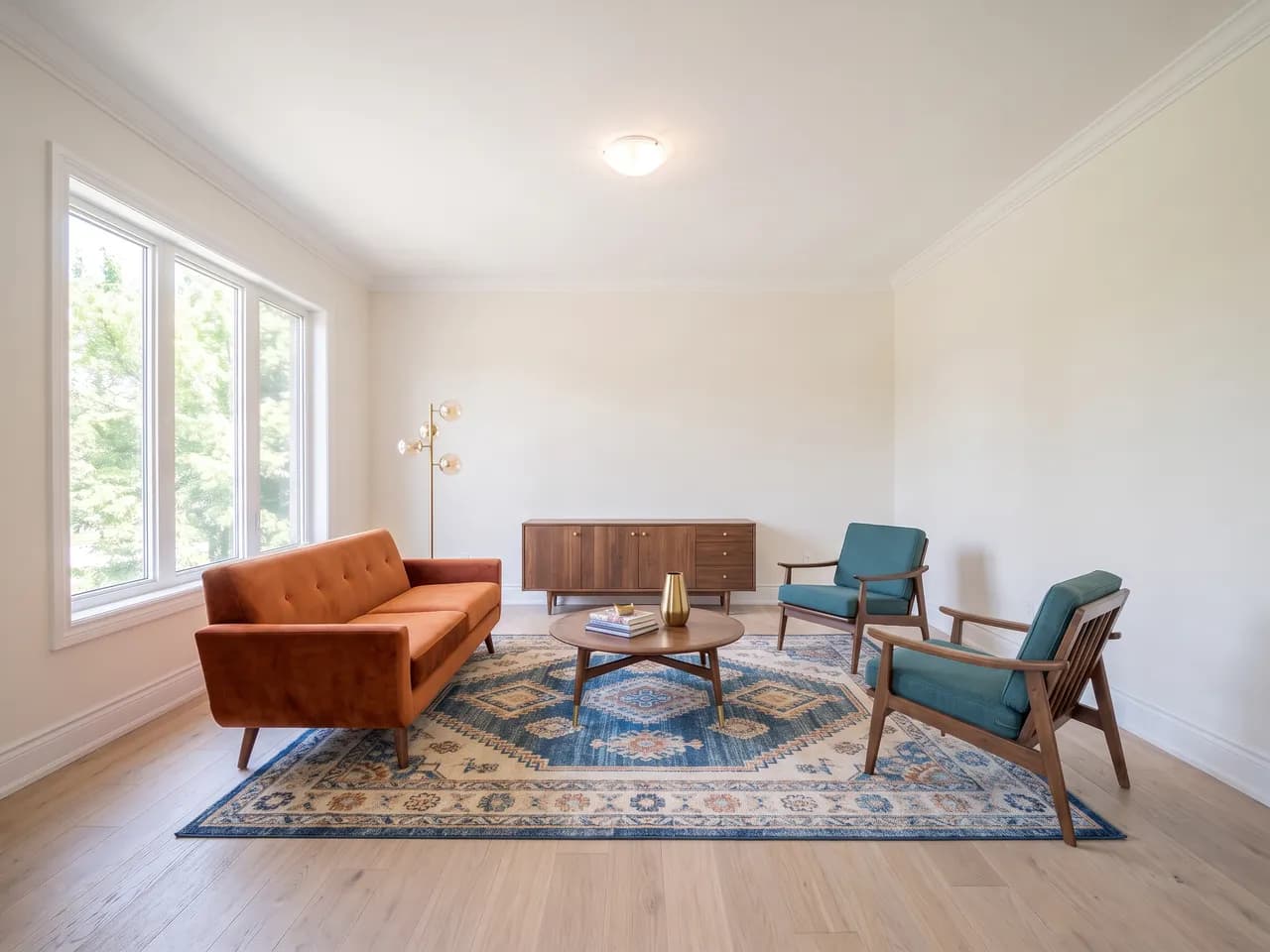
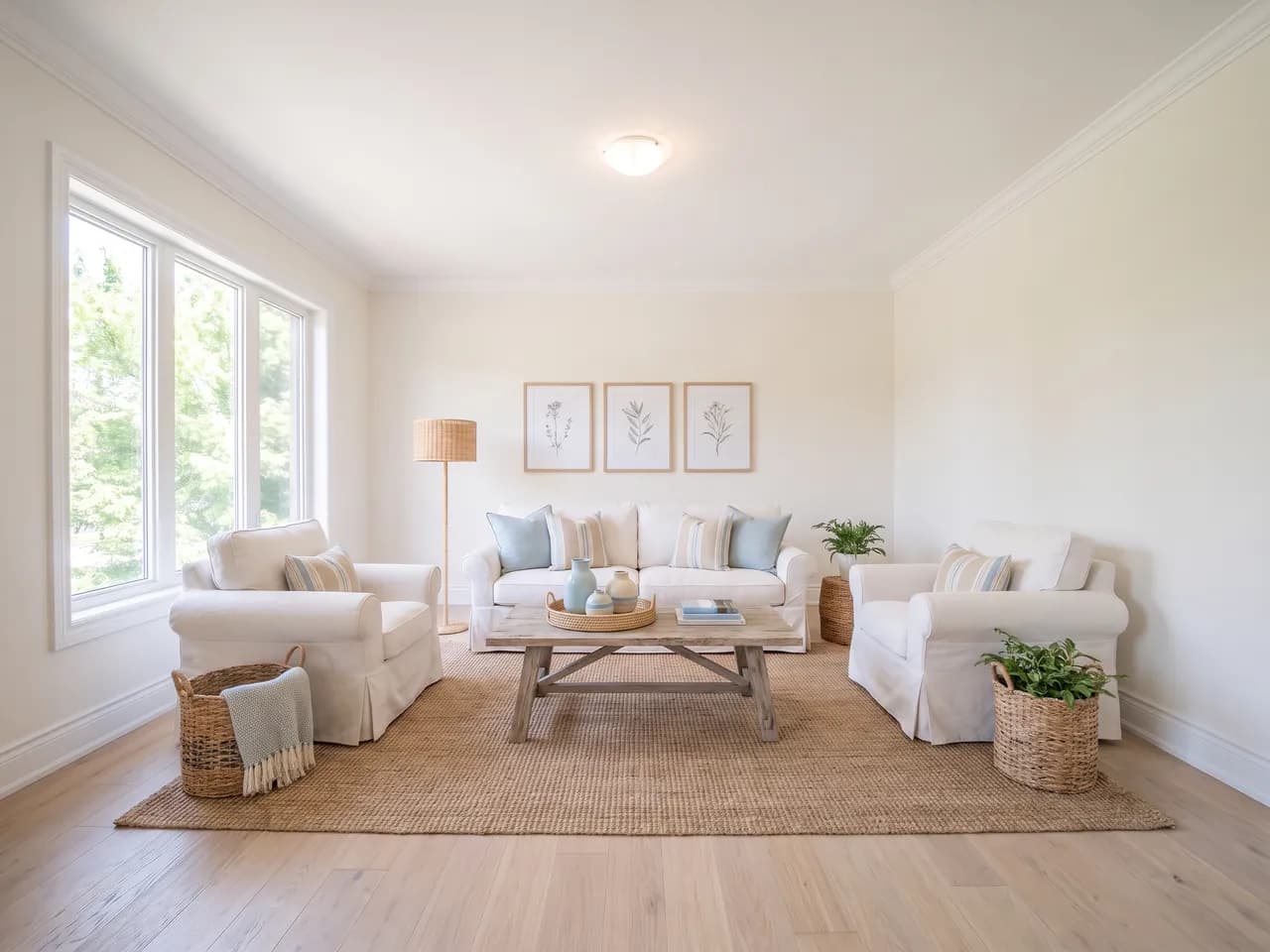
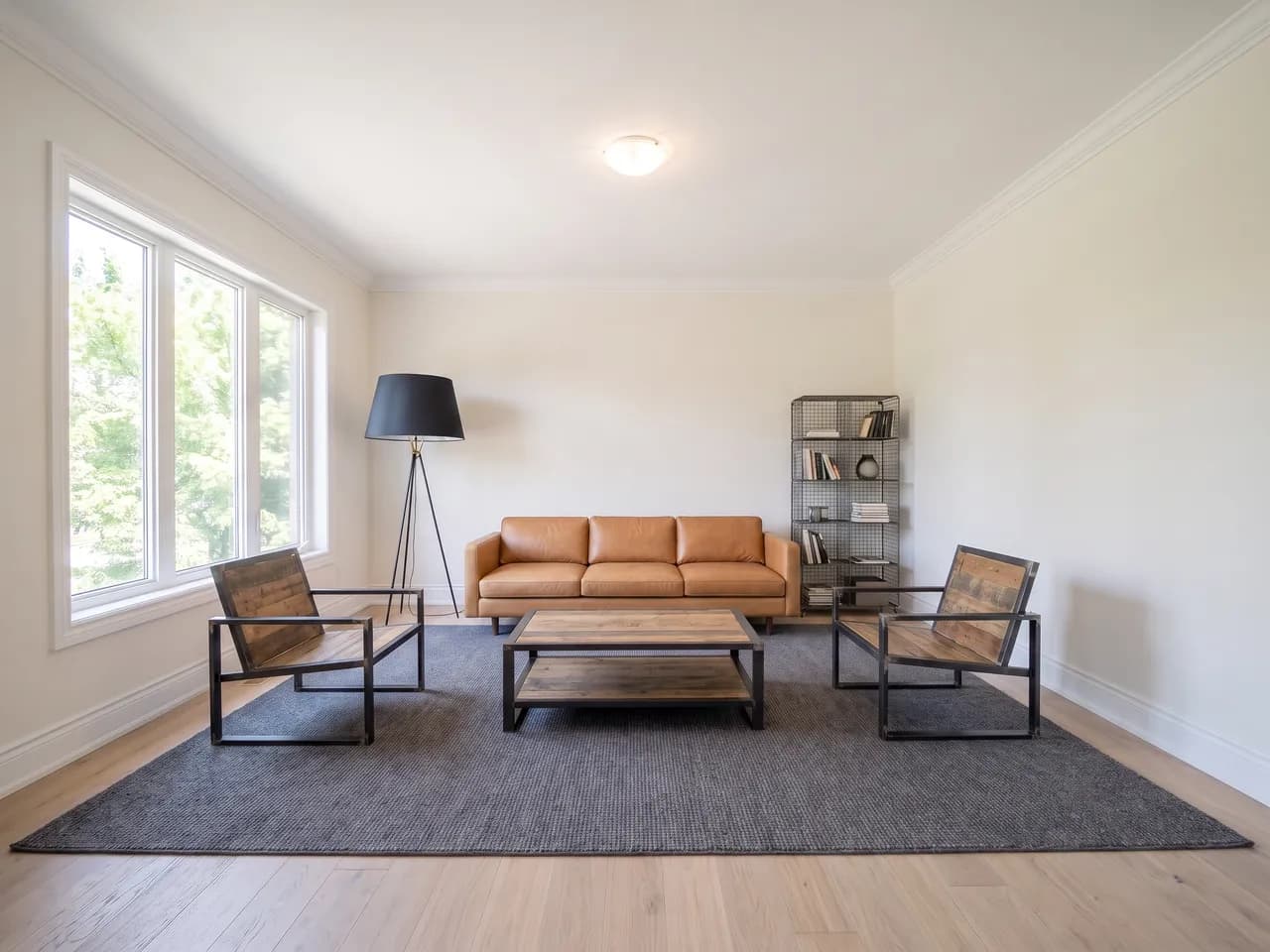
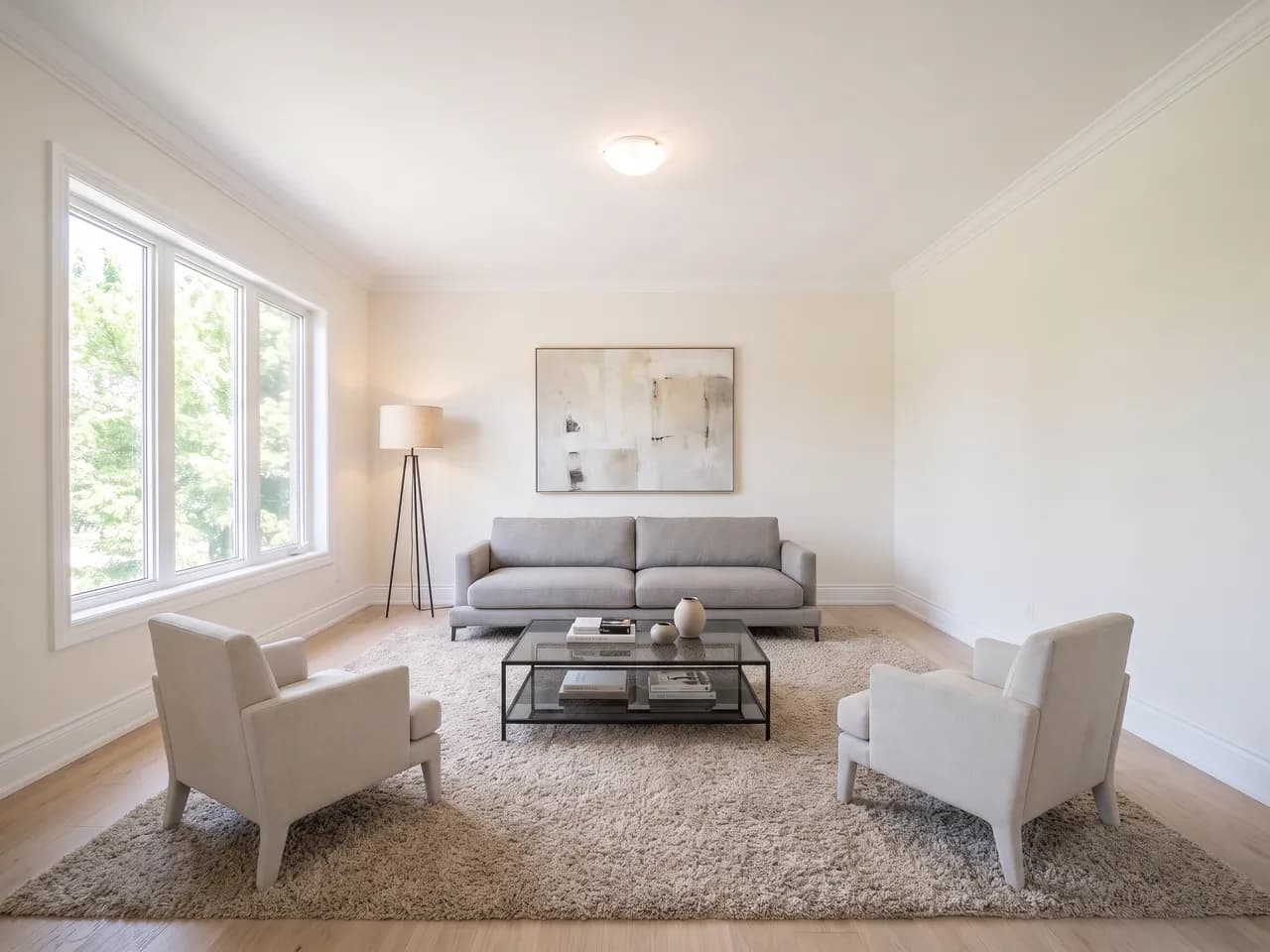
Furnish the room. Never move a wall.

Upload one photo of an empty room and get a staged listing shot back in about a minute — with the windows, floor and proportions exactly where the camera found them.

Architecture untouched No watermark No subscription
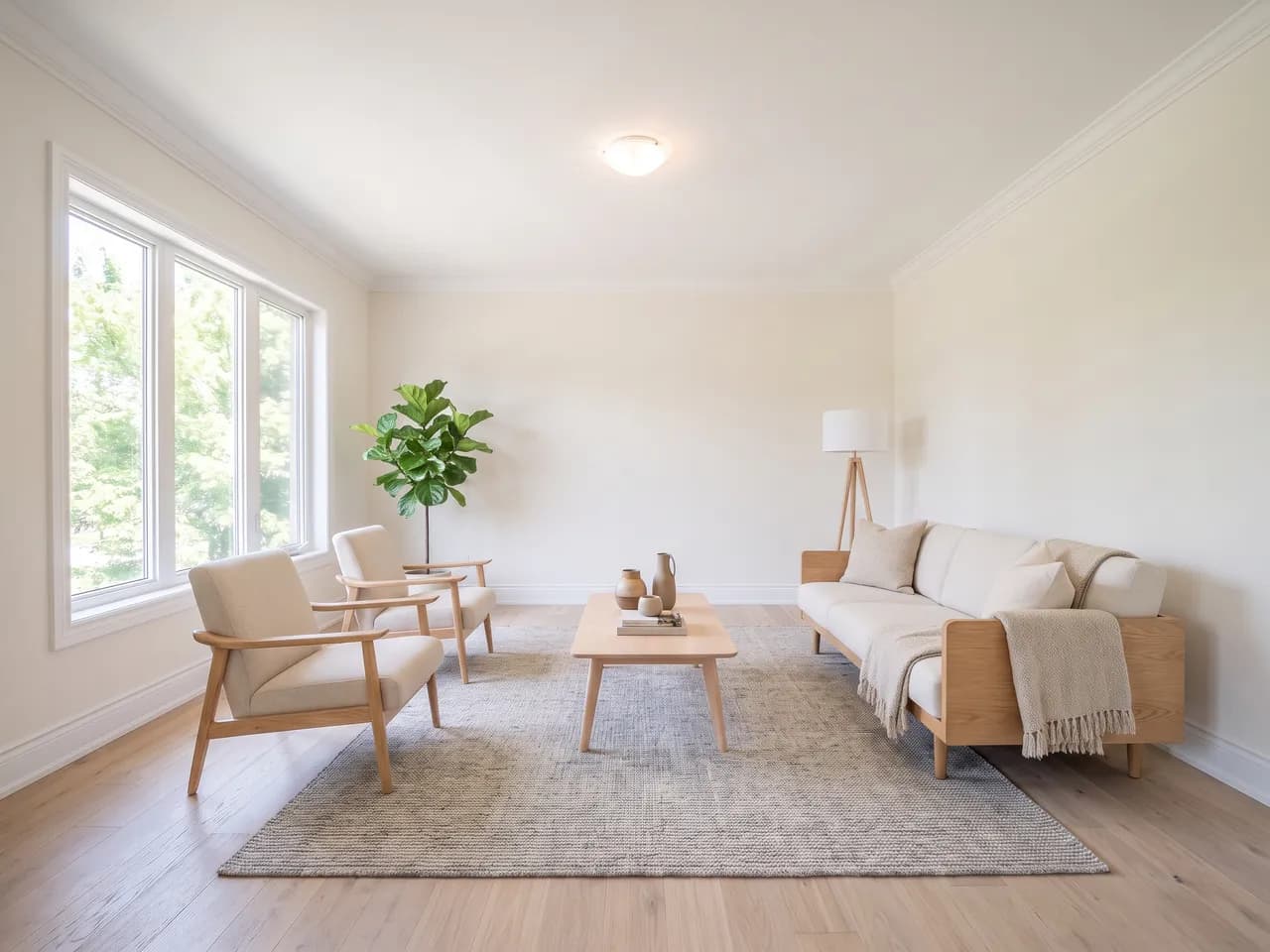
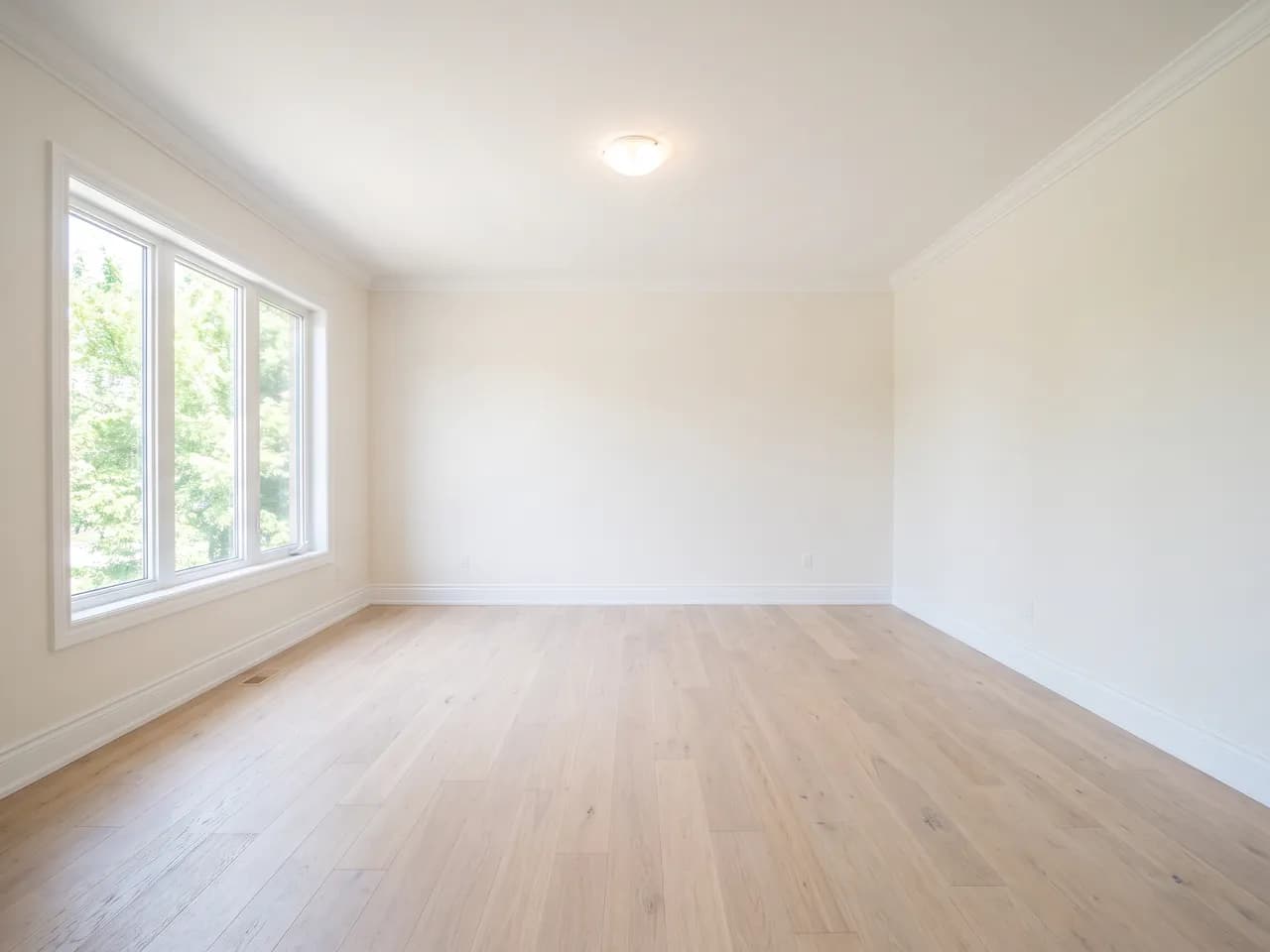
The same living room staged with pale oak furniture and a grey rug, the window and floor unchangedAn empty living room with oak floors and a large windowEmptyStaged

Drag to compare

1photo needed
5interior styles
4Kmax resolution
0walls moved
01Styles

One room, five ways to sell it

Each style is a furniture, palette and materials recipe. Tap one to see what comes back — every frame here is the same empty room from the hero, and nothing structural moves between them.

The same living room staged with pale oak furniture, oatmeal upholstery and a grey flatweave rugSame room, untouched
Furniture
Oak frames, tapered legs
Palette
Off-white, oatmeal, soft grey
Materials
Light oak, wool, ceramic
4 credits · under a minuteRun this style
02The studio

One screen, then you are done

Drop in a photo, say which room it is, tick the styles you want. The cost is on screen before you commit to anything. No project setup, no floor plan, no back-and-forth with a stager.

  • Cost shown before you run
  • Each render saved as it lands
  • Failed runs are never charged
03How it works

Empty photo in, staged photo out

  1. 01

    Upload the room

    Any straight listing photo of an empty room.

  2. 02

    Say what it is

    Living room, bedroom, dining, office or patio.

  3. 03

    Pick your styles

    One or several. Each is a separate render.

  4. 04

    Download

    Full resolution JPG. Ready for the portal.

04What we hold to

The part that keeps you out of trouble

A staged living room in which the window, floor and ceiling match the original photograph exactly

The room stays the room

Walls, windows, doors, ceiling, floor, fixtures, proportions and the light already in the photograph are all pinned. A render that quietly widens a room is a failed run, not a feature — and it is the thing that turns a staged photo into a misrepresentation complaint.

Furniture that fits

Pieces are scaled to the room and sit flat on the existing floor, with contact shadows that match the light already in the staging.

Disclosure is easy

Because only furniture changes, labelling the photo as virtually staged is all your board is likely to ask for.

Plain files, no lock-in

Standard JPGs at full resolution, sized for MLS and portal uploads. No watermark, no export tier, and no account needed to open them later.

05Trade-offs

Against physical staging

Physical stagerRoomStage
Cost per room$300–6004 credits per render
TurnaroundDays, plus schedulingUnder a minute
AccessSomeone has to be thereUpload a photo
Changing your mindBook the van againRun another style
StylesWhatever is in the warehouseFive, from one photo

Physical staging still wins where it counts most — a buyer standing in a furnished room feels something a photograph cannot reproduce, and at the top of the market that is worth the money. This is for the listings that will never get that budget, and for the photos doing the work before anyone books a showing.

06Who it's for

When an empty room is costing you

01

Vacant listings

An empty room photographs as a set of measurements. Furniture gives a buyer something to stand in, and it is the difference between a scroll-past and a showing.

02

Tired furniture

The sofa the seller has owned since 1998 dates the whole listing. Shoot the room clear and stage it instead of negotiating with the owner about it.

03

Pre-construction and rentals

Nothing exists to photograph yet, or the unit turns over every year. One shell photo covers every floor plan that shares it.

07Pricing

Credits, not subscriptions

One credit charge per finished render. Move the slider to price your own listing.

2
Resolution

Recommended

8credits2 renders · 4 eachCharged only on renders that finish.
41K renderSocial and portal thumbnails
42K renderRecommended
64K renderPrint brochures and large displays

Running all 5 styles on one room at 2K costs 20 credits — less than a stager charges to walk through the door.

08Under the hood

The specifics

Image model
google/nano-banana-pro
Output
JPG, up to 4K
Aspect
4:3 listing, 16:9 wide
Room types
5, from living room to patio
Typical run
Under 60 seconds
Training on your photo
Never
09Questions

Before you sign up

What kind of photo works best?

A straight, well-lit photo of an empty or nearly empty room, taken from a corner so two walls and the floor are visible. Ordinary wide-angle listing photos are ideal. Avoid heavy shadow, blown-out windows and motion blur.

Does it change the room itself?

No, and that is the point. Every prompt pins the walls, windows, doors, ceiling, floor surface, built-in fixtures, room proportions, camera angle and existing light. Only free-standing furniture and decor are added. A render that widens a room or adds a window is a failed run, not a feature.

Do I have to disclose that a photo is virtually staged?

Usually yes. Most MLSs and real estate boards require virtually staged photos to be labelled, and advertising rules in most of North America require that marketing not misrepresent a property. RoomStage never alters the architecture, which is the part those rules care most about, but making the disclosure is still yours to do. Check your local board's rules.

How long does it take?

Each render finishes in well under a minute. If you pick several styles they run one after another, and each one is saved as it completes.

What do I get back?

A full-resolution JPG per style, up to 4K, with no watermark. 4:3 for MLS and portal uploads, or 16:9 for hero images and video tours.

Is there a subscription?

No. RoomStage uses credits you buy as needed, and you are only charged for renders that complete. Failed and cancelled runs cost nothing.

Can I use the images in MLS listings and ads?

Yes. The renders are yours to use in listings, brochures, portals and social ads, subject to your board's disclosure rules. You are responsible for having the right to upload the source photo — if a photographer staging it, check your licence.

What happens to my uploaded photo?

It is stored so your renders can be regenerated or reviewed, and it is sent to the image model to produce them. It is not used to train anything. Deleting a render removes the upload behind it.
Your first room is free

New accounts start with credits on the house.

Create an account